What is Trademark®?
So, what is this Trademark thing all about? Can I “trademark” my fabulous new name? How does this all work?
You will not find all the answers here, but we can get you started. The more you know about trademark the better off you will be in understanding how to manage and nurture the reputation of your products and services. It also means you are better informed when you need help—from a qualified trademark lawyer.
What is a trademark?
[blockquote author=”” link=”” target=”_blank”]“A trademark is generally a word, phrase, symbol, or design, or a combination thereof, that identifies and distinguishes the source of the goods of one party from those of others.” (so says the US Patent and Trademark Office—USPTO–quoting the statute)[/blockquote]
A little boring, but it is “official”—they even have a nice logo. Let’s try some examples.
Think of a trademark as a name

a phrase (like a slogan)
Symbol Design

or any combination, in fact, it can also be a shape, color or a sound.

Yes, sounds. The USPTO has plenty of sound examples. https://www.uspto.gov/trademark/soundmarks/trademark-sound-mark-examples
See if you recognize this one.
https://www.uspto.gov/sites/default/files/75332744.mp3
That is, anything that you use to “mark” your products or services as different from any one else–and which takes on a life of its own.
Trademarks really are “all about you”
Trademarks really are all about you. For once, it is really all about you–at least you as an enterprise (think commerce–trademarks only have meaning when “the mark is in use in commerce” or there is a “bona fide intention” to use it in commerce). It identifies you and your enterprise and acts as a sign (like your brand name) of the source of your goods different from any other source of goods.
Think of all your goodwill, your reputation, the sum total of all your advertising, promotion, good press, bad press and customer experiences all bundled inside of your trademark. When people recognize your trademark, they are recognizing you.
Trademarks identify the “source” of the goods, so that you can identify your goods (these are my goods not theirs) and build a reputation around them. Trademark also acts to protect consumers by allowing consumers to be able to tell different products apart.
Service marks are the same. Service marks are really the same as trademarks, they just apply to services instead of products.
Trademarks are earned not to the manor born.
Simply having a great name does not mean you have a trademark. You have to use it, advertise it, display it, put it on your packaging.
Remember, a trademark is the shorthand for the reputation of your business. Reputations are not created in a day, and the same is true of trademarks. In fact, if you stop using a trademark you can lose it (“abandon” it). That also means that your reputation can rise and fall, so your trademark and what it means requires constant attention.
Just because your enterprise is new does not mean that your trademark cannot be protected. We will get to this, but even a new trademark (if it fits certain requirements) can be protected.
Confusion, confusion, confusion.
“The USPTO determines that a likelihood of confusion exists when both (1) the marks are similar, and (2) the goods and/or services of the parties are related such that consumers would mistakenly believe they come from the same source.” (The USPTO again)
As consumers, we learn to identify products and services we prefer and associate those products and services with their trademarks.
- When we see a particular trademark, it promises what we will find when we buy: a consistent level of quality (whatever that is), various features and aspects of the product and so on
When we go shopping we do not want to be confused about whether a product on the shelf is the one we are looking for or not. Or, confused about which product is which when we look for a product we saw in an advertisement
- Consumers want to know what they are getting
- Is this the “Real McCoy” or not? (We will talk about “counterfeits” later.)
But, is it confusing? When we look for Colgate toothpaste, we are not likely to confuse Colgate toothpaste with Colgate University (although the name really did come from the toothpaste makers–amazing, huh).
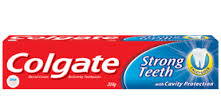

- Different products compete against each other in their “class”.
- We do not expect there to be two different “Colgate” toothpastes from two different sources. That would be confusing.
- But, we also know that once we get far away from personal health and grooming products, that we can see the same names used for entirely different products.
- For example, AIM (which is also a toothpaste)
- AIM toothpaste (which is produced by Church and Dwight)
- “AIM Solder is a leading global manufacturer of tin-lead and lead-free solder assembly materials for the electronics industry.”
- “The AIM Companies, an international group whose common goal is to provide high-quality whole food concentrates and supplements that improve people’s lives.”
There can be a Ford Motor Company and a Tom Ford fashion designer.
Registering your trademark.
This is what everyone wants to know about.
You can “register” your trademark with the US Patent and Trademark Office (USPTO) if you want additional protection for your trademark. That is, you do not “trademark” something. You already have the trademark. You “register” the trademark you have (or expect to have) in order to protect it.
- You apply for registration of your trademark with the US Patent and Trademark Office (USPTO).
- You are actively encouraged to do this on-line. Currently it cost $225.00 per class of goods/services.
Remember when we talked about how you can have an AIM toothpaste as well as tin-lead and lead-free solder assembly materials and high-quality whole food concentrates and supplements. That is because they are in different “classes” (those products are not in the same industry, market etc. or of the same type so they do not really compete, or cause confusion—although the trademark classes do not really work that way).
“Example: If the application is for one mark (which is, in fact, all that is permitted in an application) but the mark is used for goods in two different classes, such as computer software in Class 9 and t-shirts in Class 25, then a filing fee for two classes is required before the application could be approved.” Helpful example from the USPTO
Here are the current classes (there are 45 international classes, which is what everyone uses, not just in the US)
Intent to Use (ITU) applications
Remember we said that even a new business can seek to protect its trademark. The USPTO does accept applications based on your good faith intention to use that trademark.
“You filed a trademark or service mark application with the United States Patent and Trademark Office (USPTO) based on a good faith or bona fide intention to use your mark in commerce with your goods and/or in connection with your services in the near future.” USPTO
- “In the near future” means 6 months (plus any extensions) after the “Notice of Allowance” (NOA), so it is not forever.
Well and good, but the application is not complete until you actually use the trademark
- “However, until you can show actual use of your mark in the marketplace with specific goods and/or services you will not be able to register your mark. In other words, you will not be able to register your mark unless and until you acceptably and timely convert your ITU application to one based on use in commerce. “ USPTO
What does the USPTO do with the application?
They then examine the trademark to see if it might cause a likelihood of confusion.
“The USPTO determines that a likelihood of confusion exists when both (1) the marks are similar, and (2) the goods and/or services of the parties are related such that consumers would mistakenly believe they come from the same source.”
They will also look at other factors, including whether the proposed trademark may simply be “descriptive” or “generic” (more on this later when we talk about “strong” v. “weak” trademarks). They will also look to see if the trademark might be deceptive or have other disqualifying characteristics.
Not all applications for registration are granted. In fact, many are rejected, especially because they are similar to existing trademarks and thus present a likelihood of confusion (the USPTO tends to take the “better safe than sorry” approach). This is where a good trademark lawyer can help. Those initial rejections are often overturned.
If your “registration” is accepted, then you can start adding the registered mark (®) next to your trademark, but not before. If you want to start claiming that your trademark is protected before you are granted your registration you can start using the common law marks (™) for trademark or (℠) for service mark.
Protect, protect, protect.
Just as you worry about your reputation, you need to also worry about and protect your trademark. Just as with your reputation, it may stay the same, but mostly it gets better or worse.
What can happen to your trademark?
It is almost always about confusion.
- Self-inflicted. Of course, you can always damage your own trademark/brand. Nothing like changing the quality of your goods and services to change how your customers see you. It may take time, but they will notice.
What else? Your marketing messages can be confusing, offensive or misunderstood. You can get yourself into the middle of a political skirmish and so on.
- “Unintentional” intrusion into your space (or their space). You are having great success with your “Bill’s Jeans” in your town. But, of course, you are not the only Bill, or the only Bill who likes jeans. Lo and behold there is another Bill in the next town, and this Bill calls his place “Bill’s Jeans and Jammies”. Everyone is happy (at least as happy as they are likely to be), and one Bill does not know about the other Bill.
But one day, other Bill decides that he is doing so well he wants to open up another store, but this time in your town. And, if he does, will your “Bill’s Jeans” customers be confused about this new store?
Now what do you do? (Have you acquired a secondary meaning to your name?). It may be time for some good advice from a qualified trademark lawyer.
- “Intentional” interference or misuse. Bill’s Jeans are selling like gangbusters. So much so that “Bill’s Jeans” have gained a secondary meaning and you can now register it as a trademark. You are delighted. But one day you are walking down the street in Big Town and see street vendors selling Bill’s Jeans at a discount.
They look like Bill’s Jeans, but they are not. You know that and can spot the differences. These are counterfeits. In other words, someone else is “palming off” their goods as yours. It is palming off when they put your name on their goods (“reverse palming off” is when they take your name off your goods and put their name on instead). While people worry about losing business to counterfeits, remember that counterfeits also damage the brand and the trademark.
There is some help under the Lanham Act (also known as the Trademark Act of 1946), which is the federal law that deals with the protection of both registered trademarks and unregistered trademarks (you protect your federal trademark rights under the Lanham Act). Although how you proceed is never simple, remember that at some point you will need to protect your trademark. If you do not protect your trademark, you can lose your protection.
“The Lanham Act provides national protection of trademarks in order to secure to the owner of the mark the goodwill of his business and to protect the ability of consumers to distinguish among competing producers.” Park ‘N Fly, Inc. v. Dollar Park & Fly, Inc., 469 US 189 at 198 – US Supreme Court 1985
Some trademarks are more equal than others.
Not all trademarks are the same (some trademarks are considered “strong” and some are considered “weak”). Believe it or not, there is a hierarchy of trademark categories:
Strong
- fanciful or arbitrary;
- suggestive;
Weak
- descriptive; or
- generic.
These are sometimes called the “Abercrombie & Fitch” categories Abercrombie & Fitch Co. v. Hunting World, Inc., 537 F. 2d 4 (2d Cir. 1976). They were fighting about the term “safari” and Abercrombie & Fitch had real trouble showing that “safari” (except in a few cases) was not merely descriptive. (Feel free to drop this bit of trivia into any conversation. No guarantee of results.).
The strongest trademarks are the most “fanciful”, that is, completely made up, like Kodak or Verizon. Next are the “arbitrary” trademarks, which is where a word is used completely out of context, like “apple” for computers or for that matter Beatles music.
The weakest are those which are considered “descriptive” or “generic”, like Bill’s Hamburgers. They are considered weak since it is very difficult for consumers to form a strong recognition of that trademark as opposed to similar trademarks in the marketplace.
Besides, we cannot let the first person who registers “hamburgers” as a trademark to claim “hamburgers” and not let anyone else use such a generic name.
In other words, is the trademark made up of descriptive words, images or what have you where the trademark is really just describing the service (such as “PARK’N FLY”)? Those are “descriptive” trademarks.
There was a case about Park’N Fly (in the US Supreme Court no less). Park’N Fly could prevent Dollar Park and Fly from using Park and Fly even though the term was descriptive (and everyone agreed it was descriptive), since it had acquired a secondary meaning—one of the exceptions in the Lanham Act related to secondary meaning.
In addition, names which include “geographic” indicators are also descriptive such as “Chicago Pizza”, “Italian Sausage” or “Memphis Barbeque”. “Surnames” are also descriptive. Remember, Ford Motor Company and Tom Ford fashion designer. Those are people’s names and are not instantly eligible for trademark registration.
“Descriptive” trademarks are not eligible for trademark protection by the USPTO, unless and until they gain “secondary meaning”.
Secondary Meaning is when a “merely descriptive” mark, in contrast, describes the qualities or characteristics of a good or service, and this type of mark may be registered only if the registrant shows that it has acquired secondary meaning, i.e., it “has become distinctive of the applicant’s goods in commerce.”
In other words, when Henry Ford started building automobiles, there could have been several other “Ford” automobiles. But, over time, we learned to associate the Ford Motor Company with Henry Ford’s Motor Company. That’s secondary meaning.
Other good examples are clothing designers, whose names take on a secondary meaning, not just Tom Ford fashion designer, but Giorgio Armani, Coco Chanel, Jimmy Choo and tons of other well-known designers. These are all names of real people, but they took on a life of their own.
Or, the proposed trademark is “generic”, that is the same as the words we use for the product (such as “Fingernail Polish”) or something that became generic over time (such as “Aspirin”, “Zipper”, “Thermos” or “Escalator”).
Generic trademarks are never eligible for trademark registration. Worse, if you had a wonderful trademark that became “generic” because it became synonymous with the product, then you will lose that wonderful trademark.
That explains why “Xerox” is careful to make sure that “Xerox” does not become a verb (“I am going to Xerox that.”)
Trademark v Positioning/Branding
But the stronger the trademark, the less clear what the product is. In other words, “positioning” or “branding” theory says–make it obvious who you are (Bill’s Burger Barn, not Bill’s Stuff Cooked on a Grill and Served in our Place) so that your consumers know what you do. But positioning is about selling not about protection. A great example is hotels.com. The domain name is a terrific one. Everyone gets it right away. But, it is nearly impossible for such a domain name to obtain trademark protection since it is entirely generic.
Remember, Trademark is about attaching you (the “source”) to your product and protecting you from others who might want to take advantage of that.
Congratulations
We see a Trademark Merit Badge in your future.
Resources
United States Patent and Trademark Office
https://www.uspto.gov/trademark
https://www.uspto.gov/trademarks-getting-started/trademark-basics
https://www.uspto.gov/sites/default/files/documents/BasicFacts.pdf
https://www.uspto.gov/trademarks-application-process/filing-online/intent-use-itu-applications
International Trademark Association
http://www.inta.org/Media/Documents/2012_TMBasicsBusiness.pdf
http://www.inta.org/Media/Documents/2012_TMUseMediaInternetPublishing.pdf